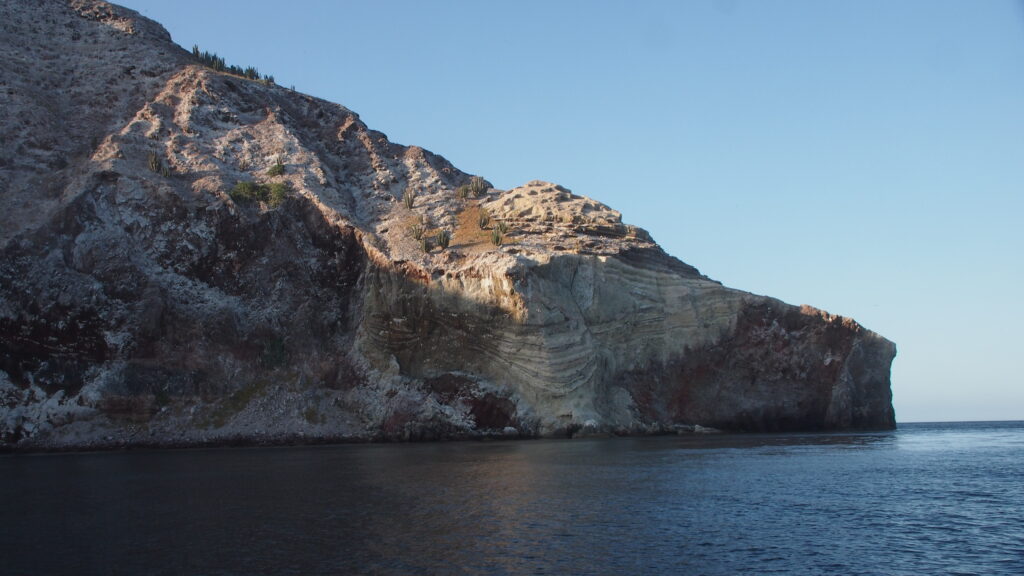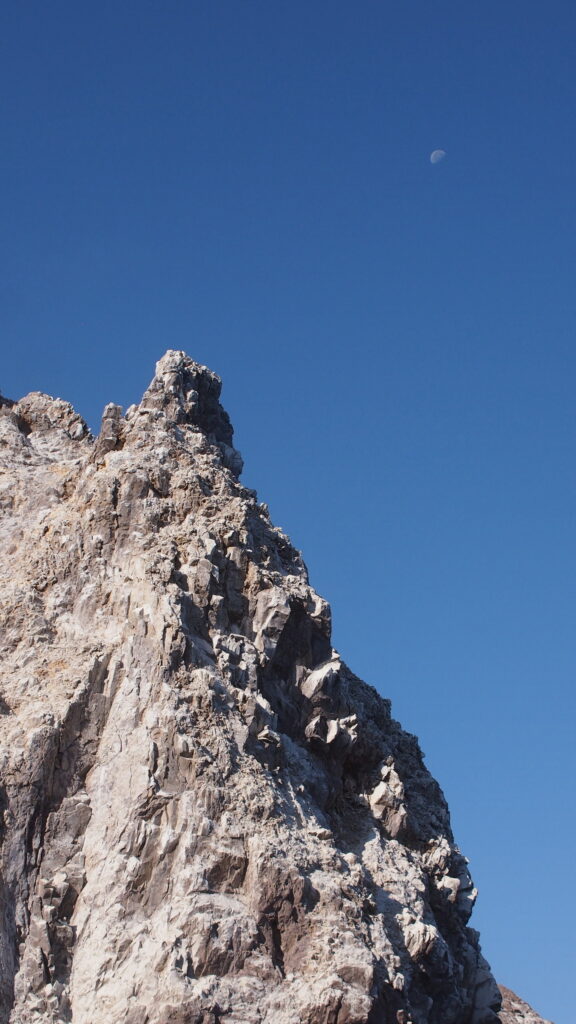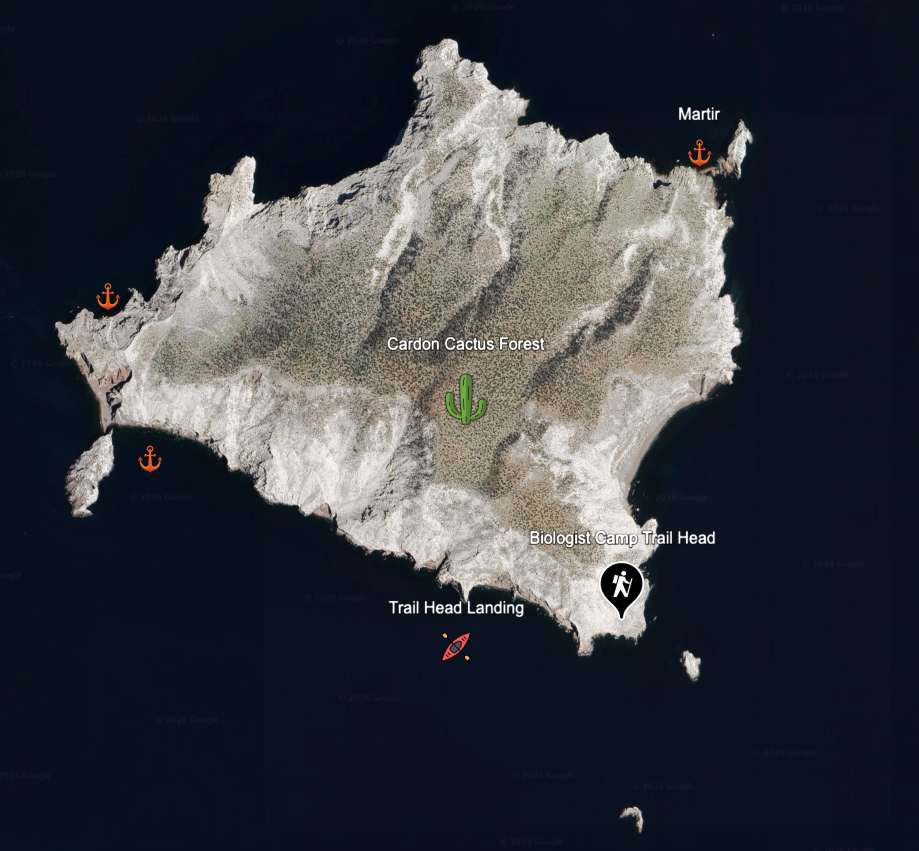
The most oceanic of all islands of the Sea of Cortes lies just 76 nautical miles from San Carlos. Most. 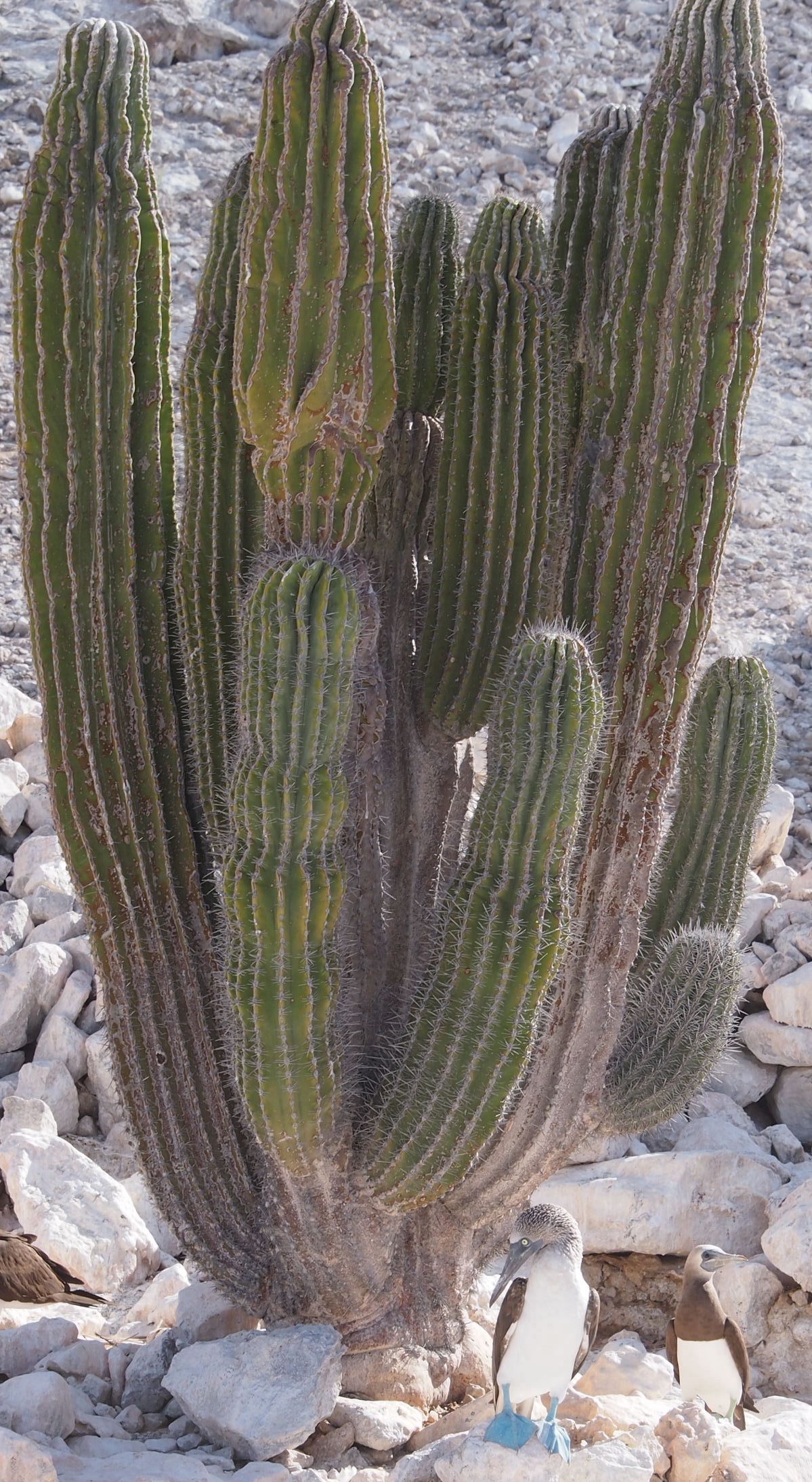 cruisers ignore it. They should not. It’s rich history and biodiversity is a direct testimony to why Cousteau called this body of water the World’s Aquarium. In June, just a few weeks ago as I type this, I visited the island again. It had been a while, but Martír did not disappoint. San Pedro Martir has several good anchorages on it. In summer, the north side of island provides excellent protection from a southerly swell. As well, the south side will give good protection in northerly winds. When viewed from the satellite image, you can see the north coast of Martir is broken up into several bites all protected and calm in southerly conditions. I have anchored all over the island over many years in small pangas, powerboats, and sailboats. I have only marked three anchorages on the map. Both north side anchorages are 45 feet deep. They are rock mixed with sand. The southwest anchorage can be dropped around 35 feet and is mostly rock, so don’t drop a Danforth unless you want to go diving for it. The southeast bite of the island in front of the cliff is also reported to be a good anchorage in calm conditions with a sandy bottom around 40 feet, although I have never personally anchored there. Extreme caution should be used when approaching from the Southwest. There is a dangerous rock just a few hundred yards off the rocky beach where you will find large numbers of sea lions. I have snorkeled that rock, but unfortunately, as of this moment, I don’t have a GPS coordinate on it. The small islands on the southeast side offer some of the best diving, but there are several submerged rocks, so I would only recommend diving there in calm weather with your dinghy. The whole southeast side of Martir and those small islands are a nature preserve, and no fishing is allowed.
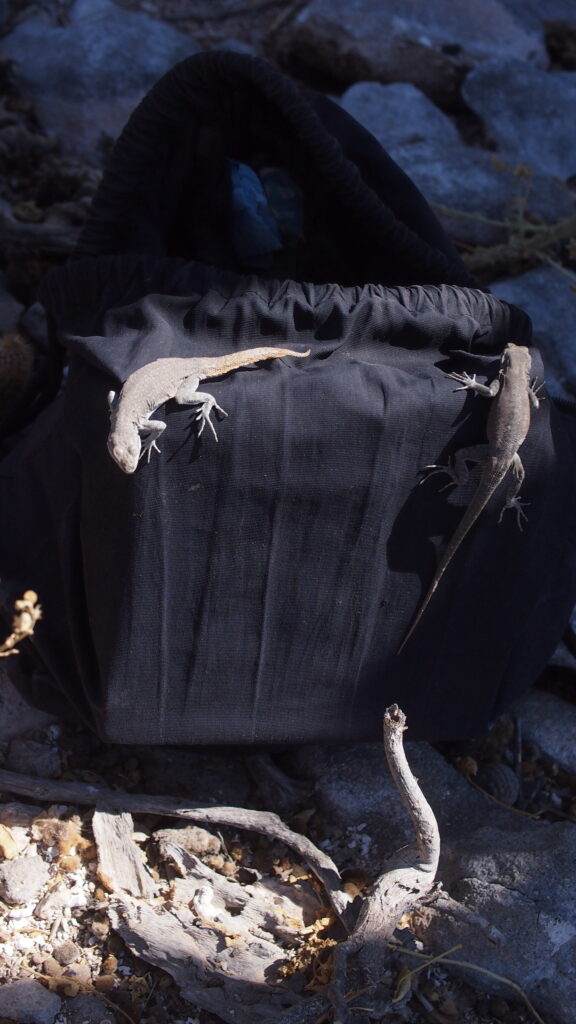
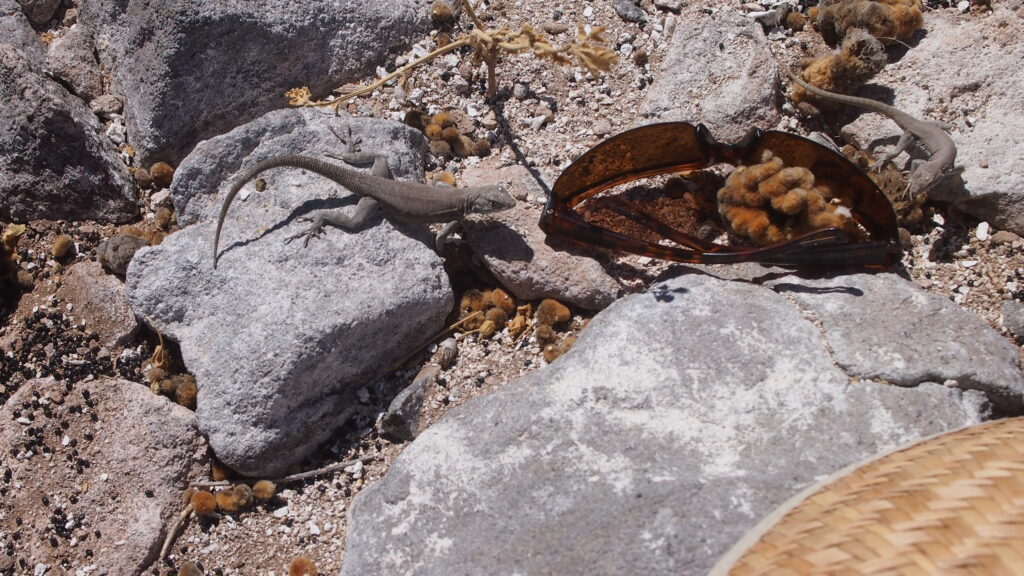
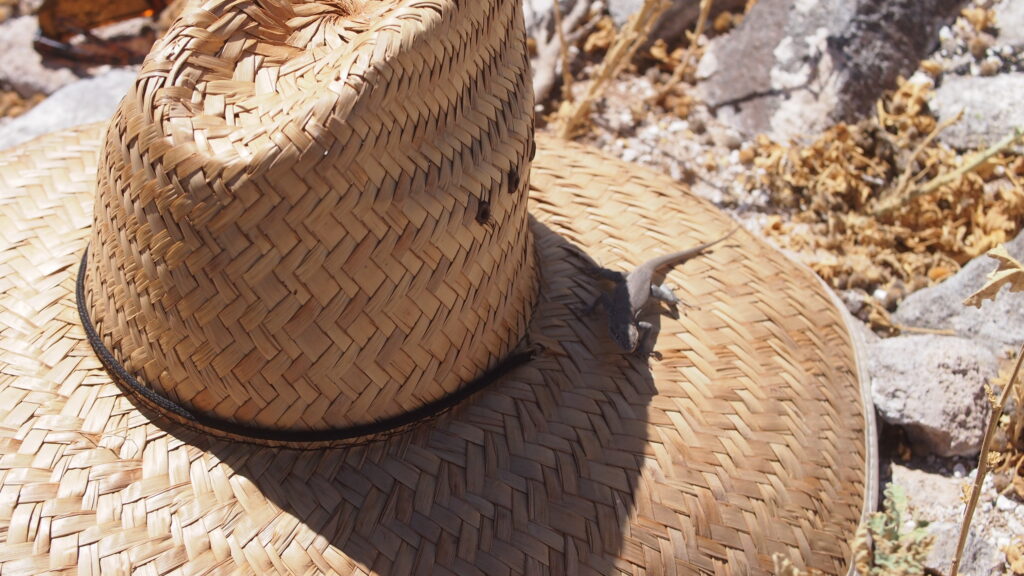
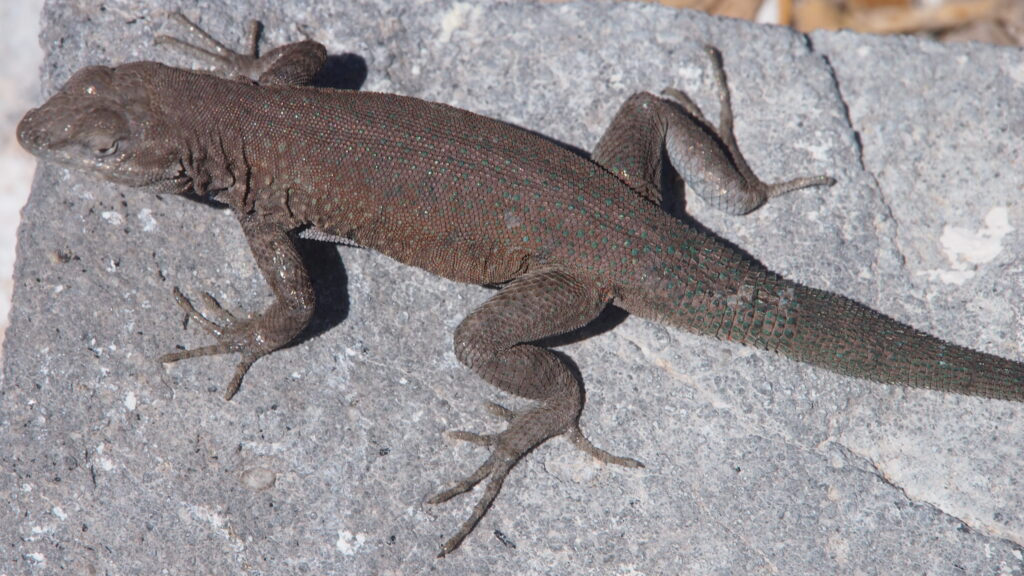
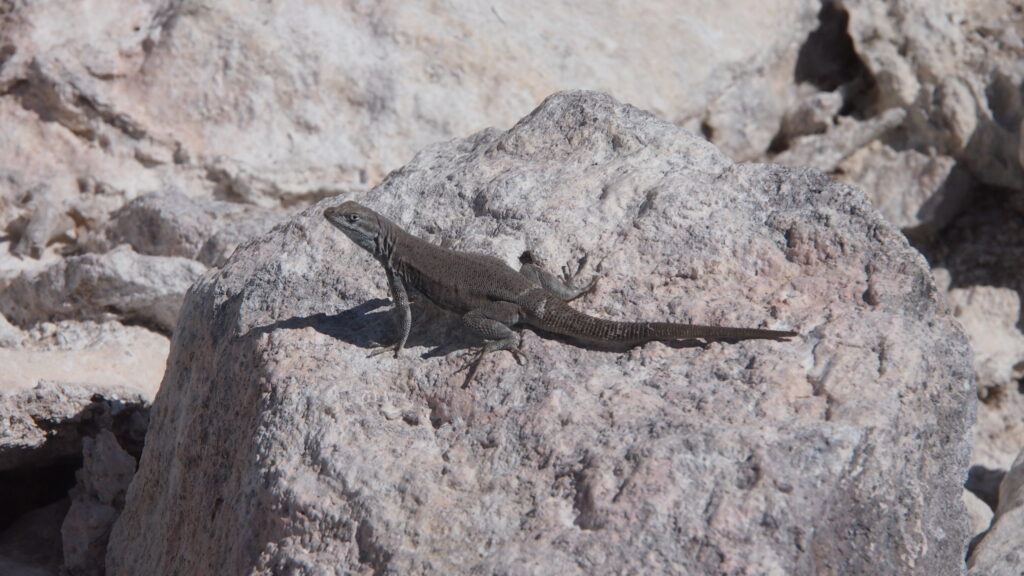
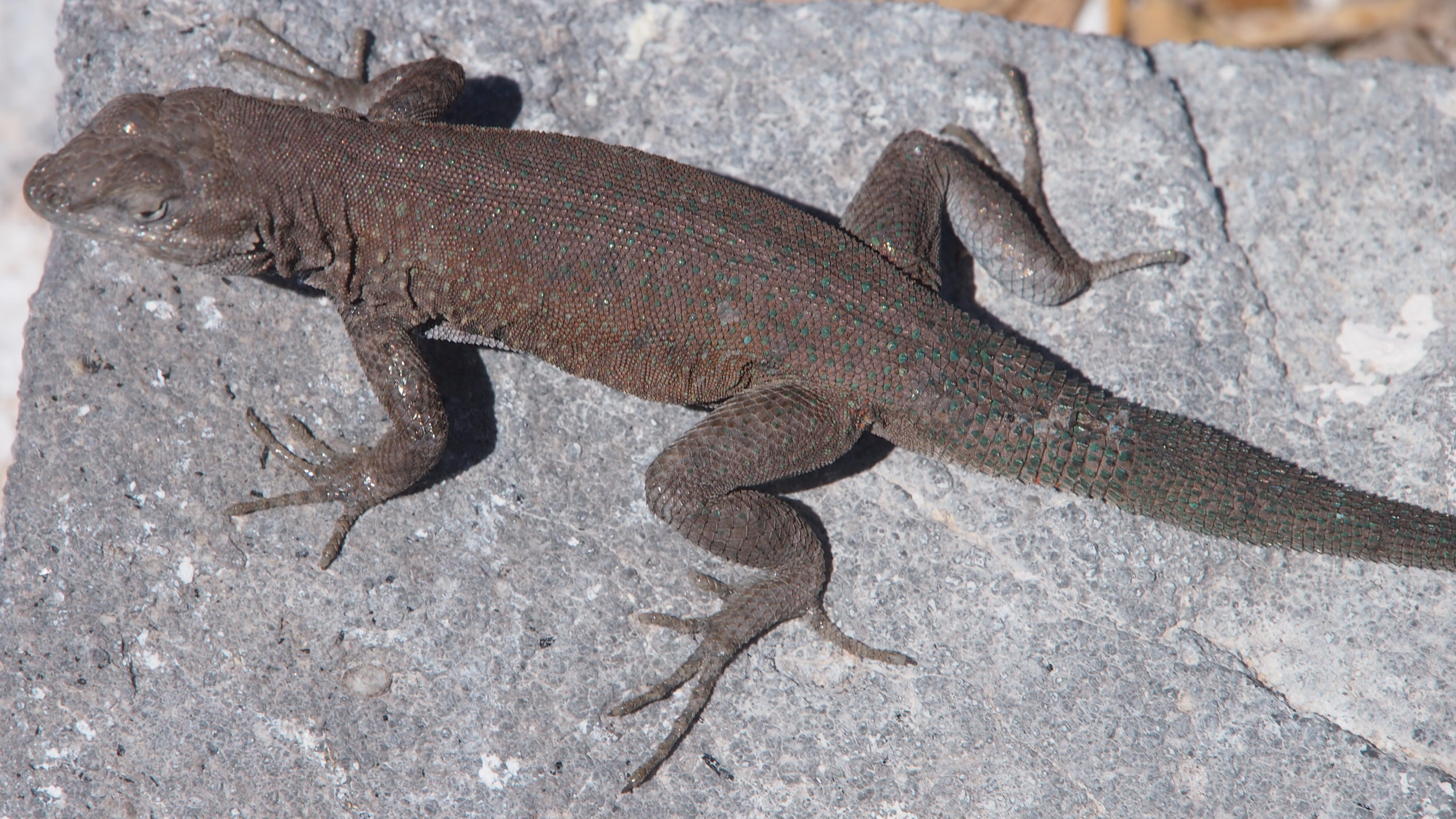
The turquiose dotted whipped tailed and highly mischevious lizard of Martir.
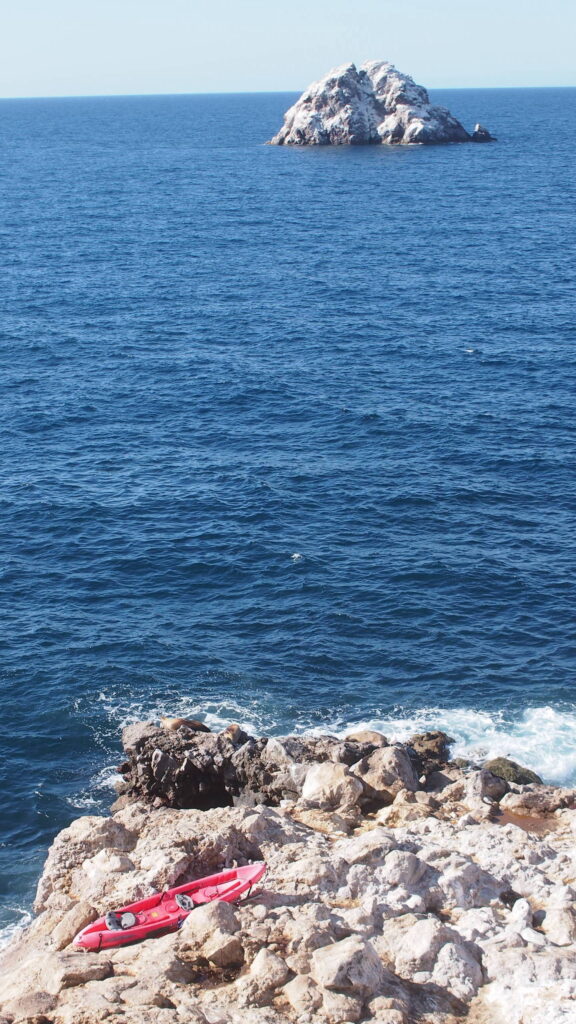
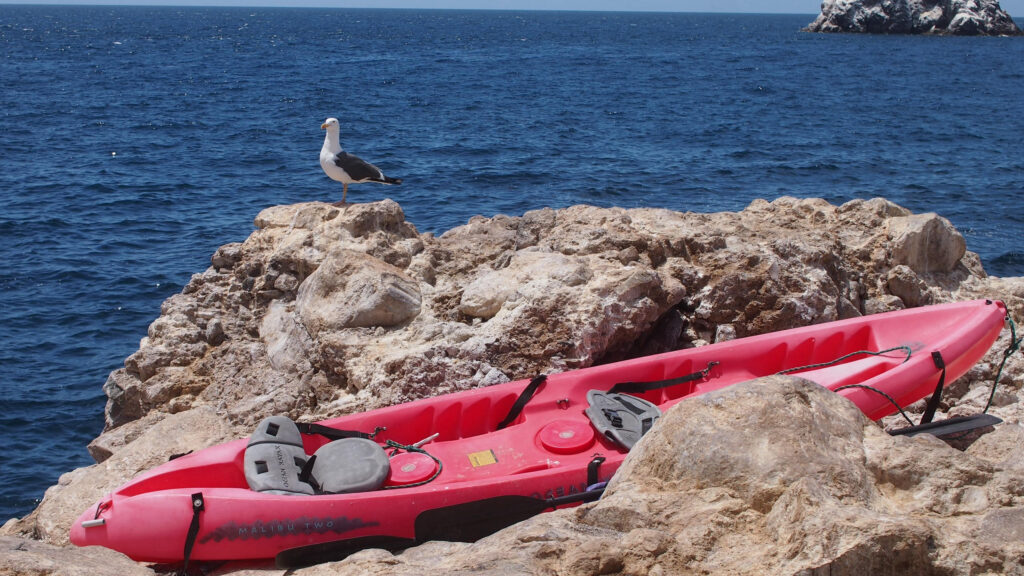
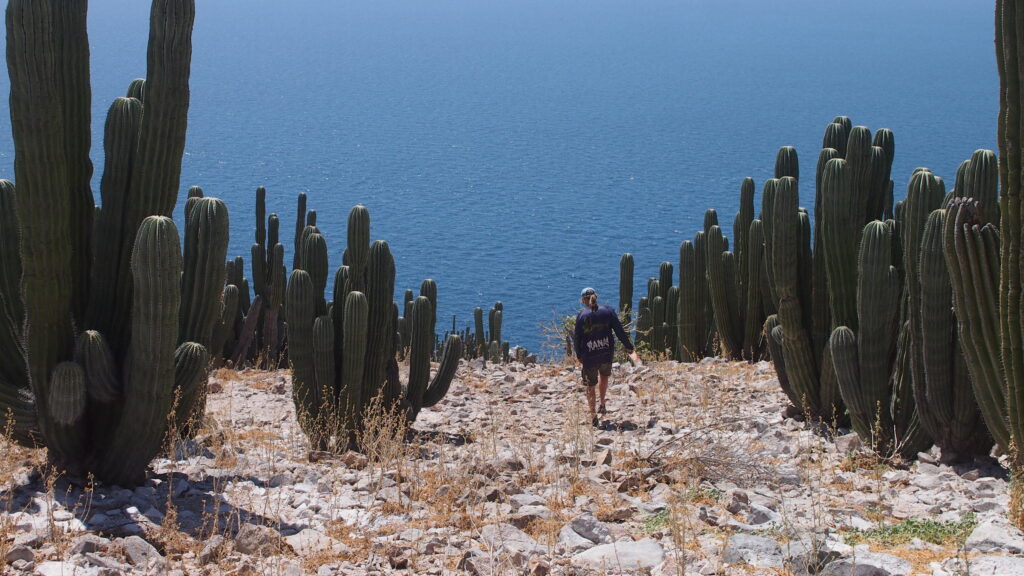
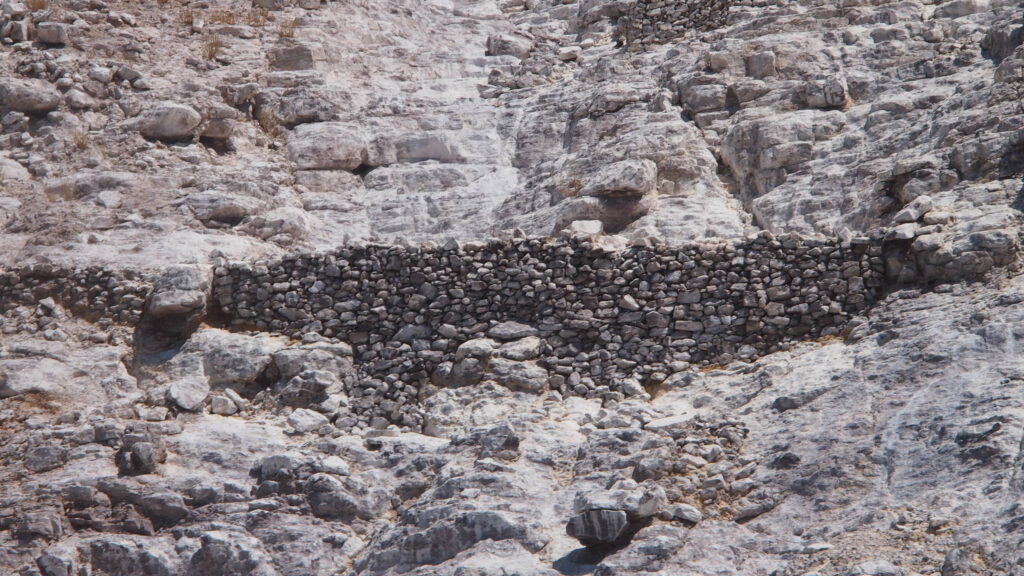
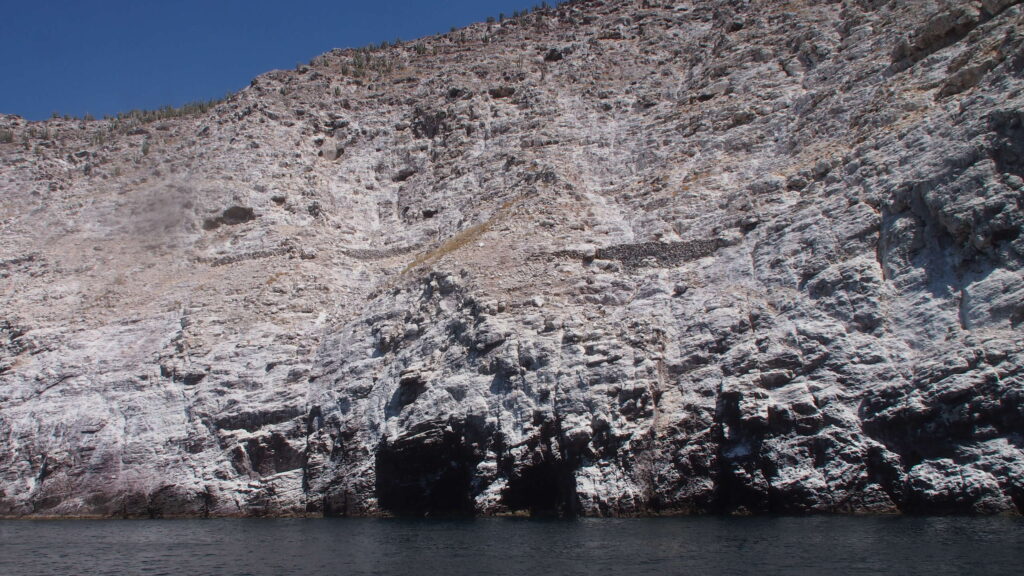
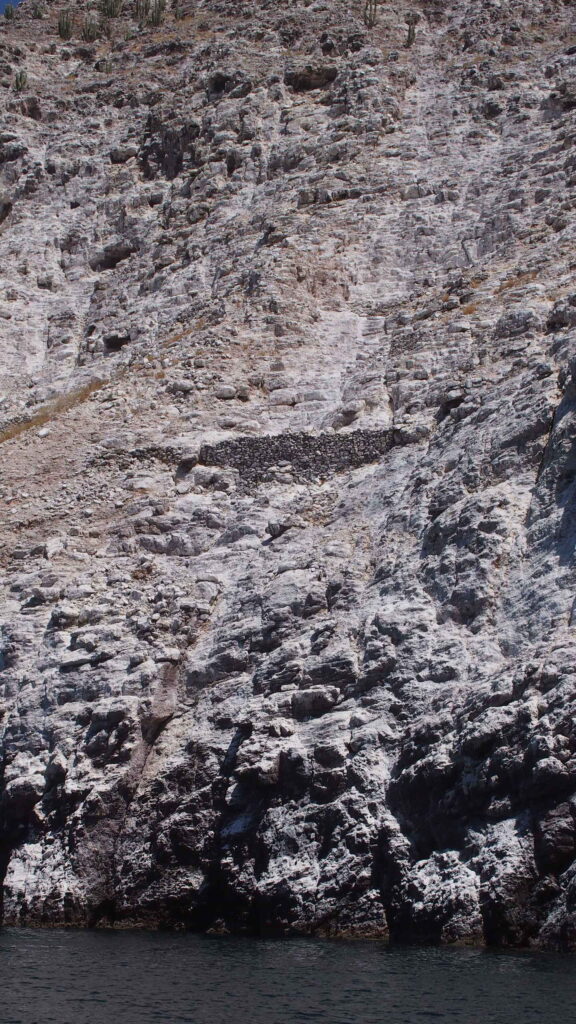
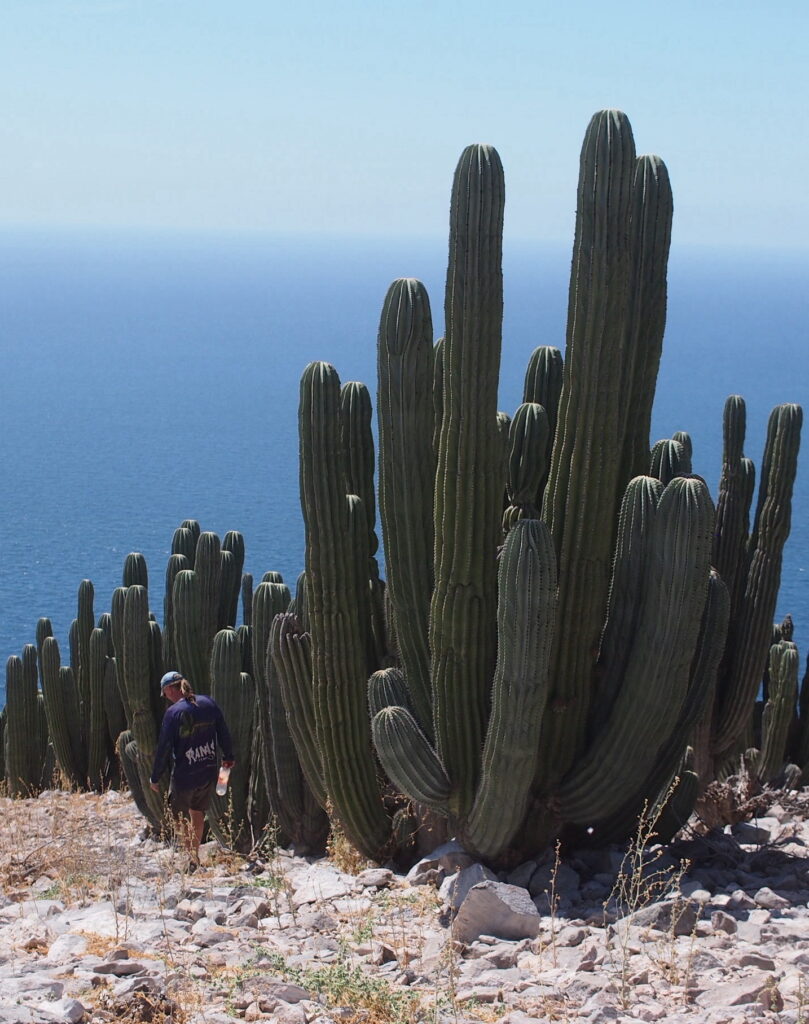
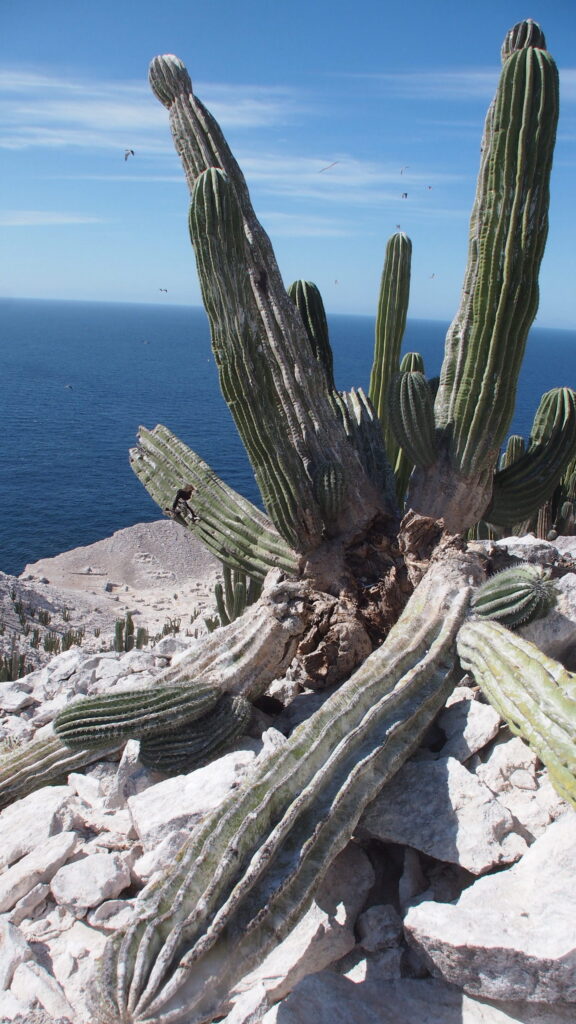
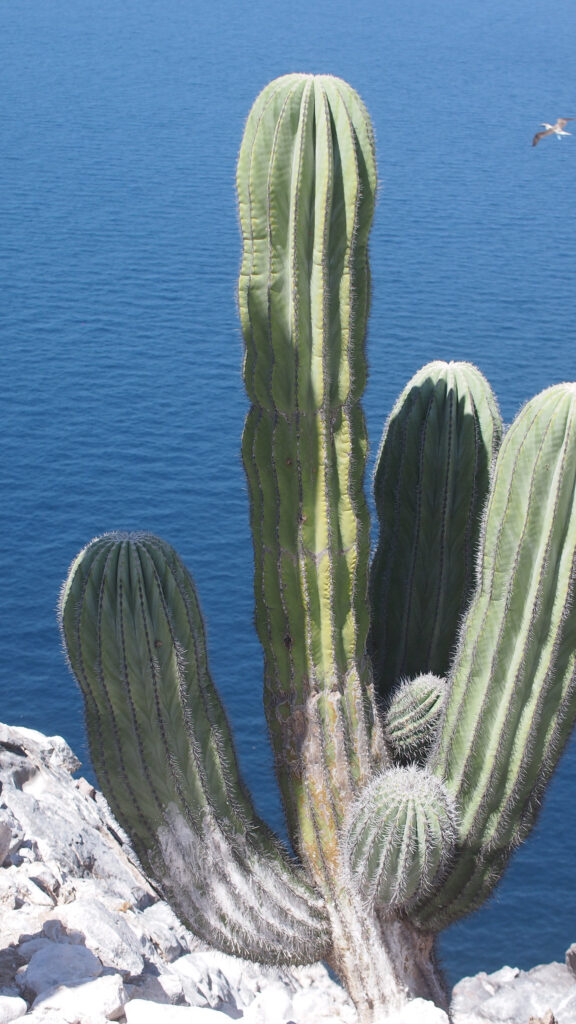
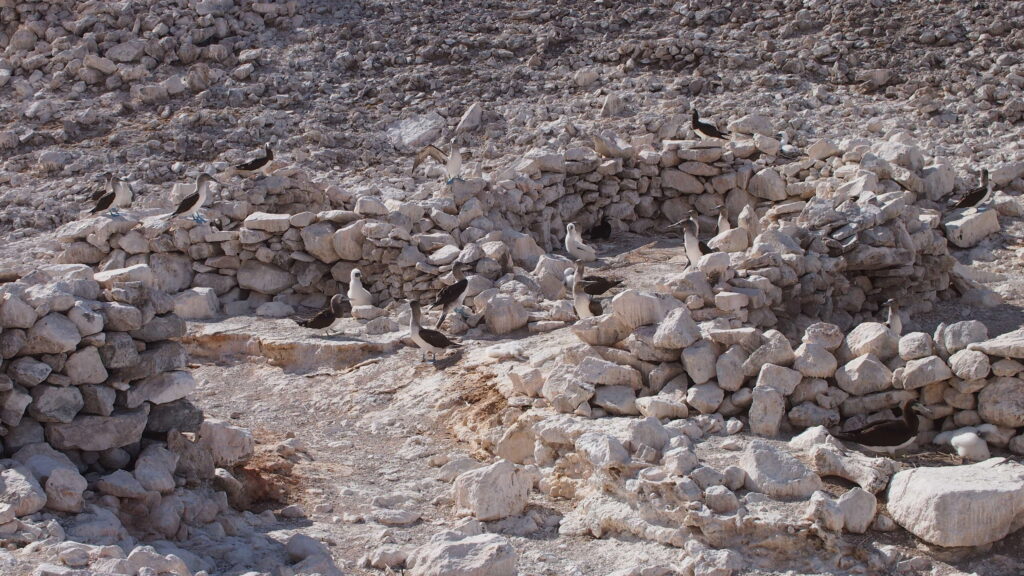
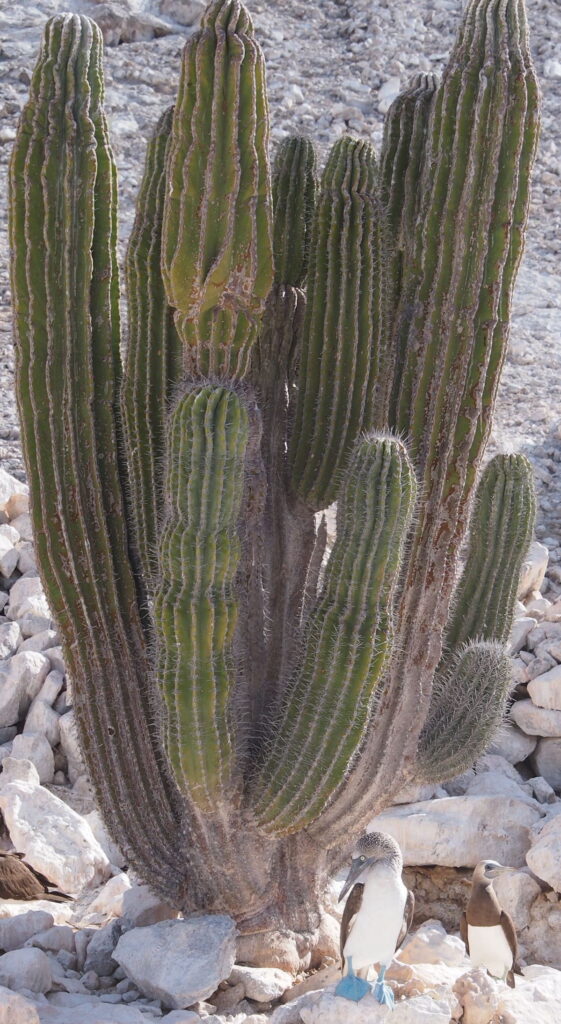
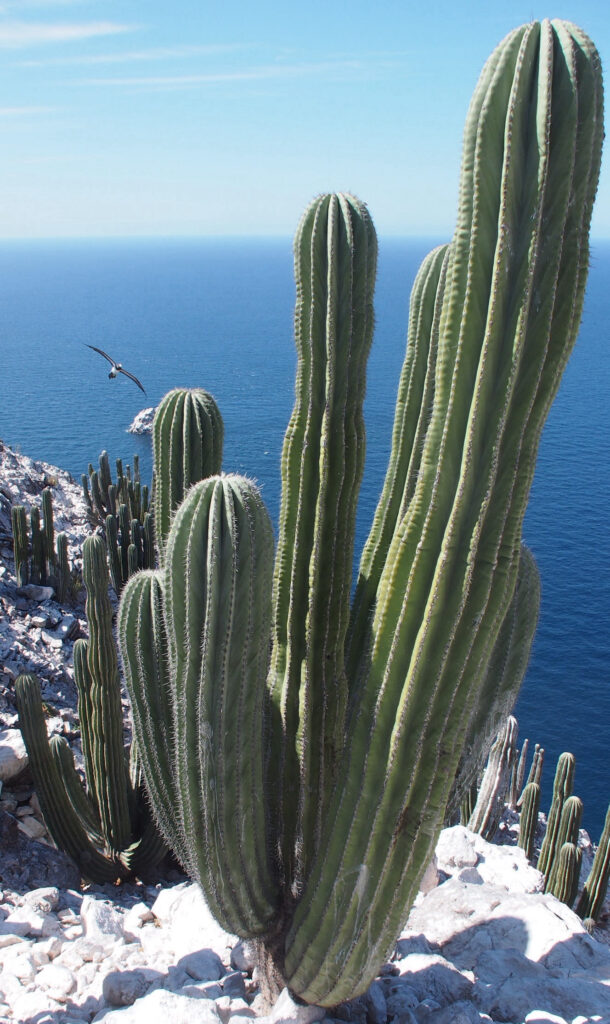
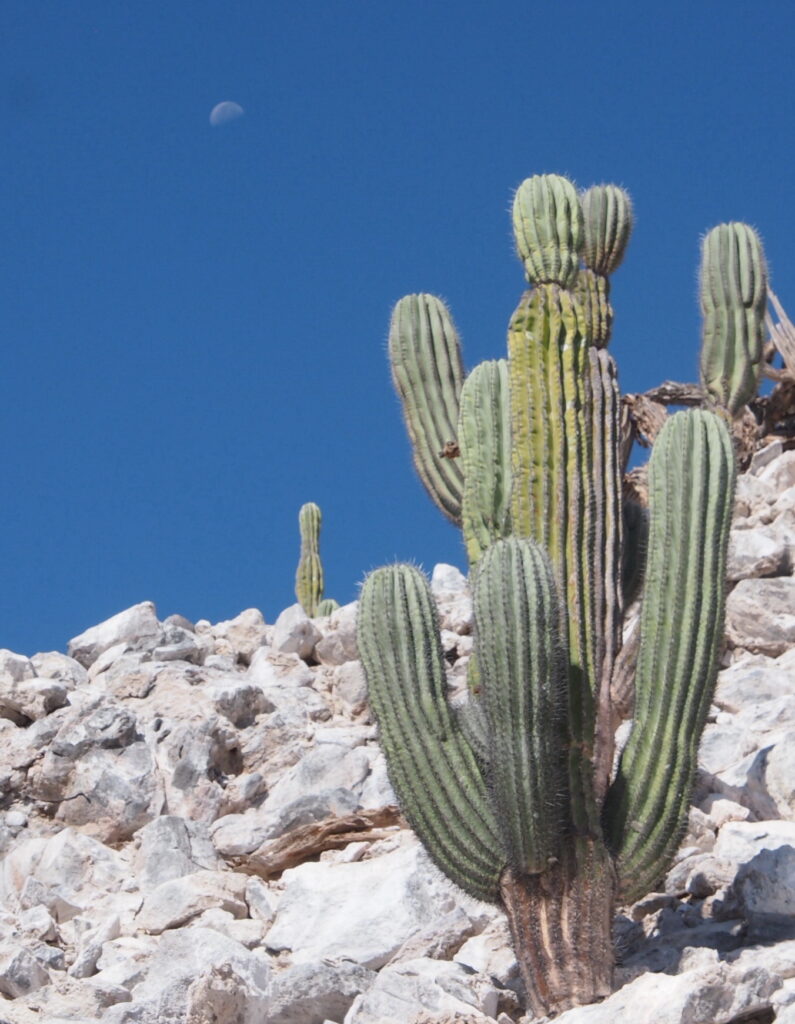
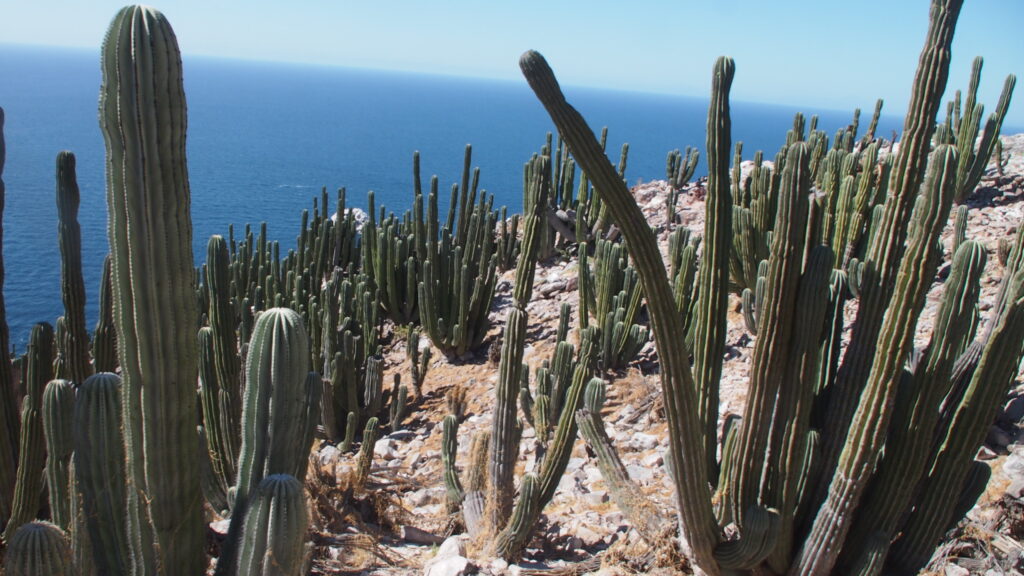
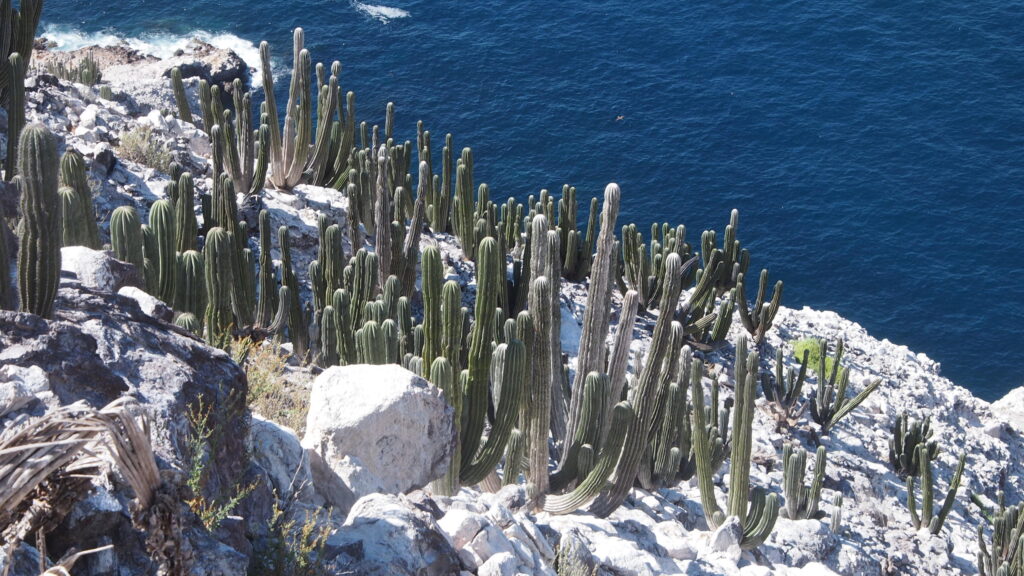
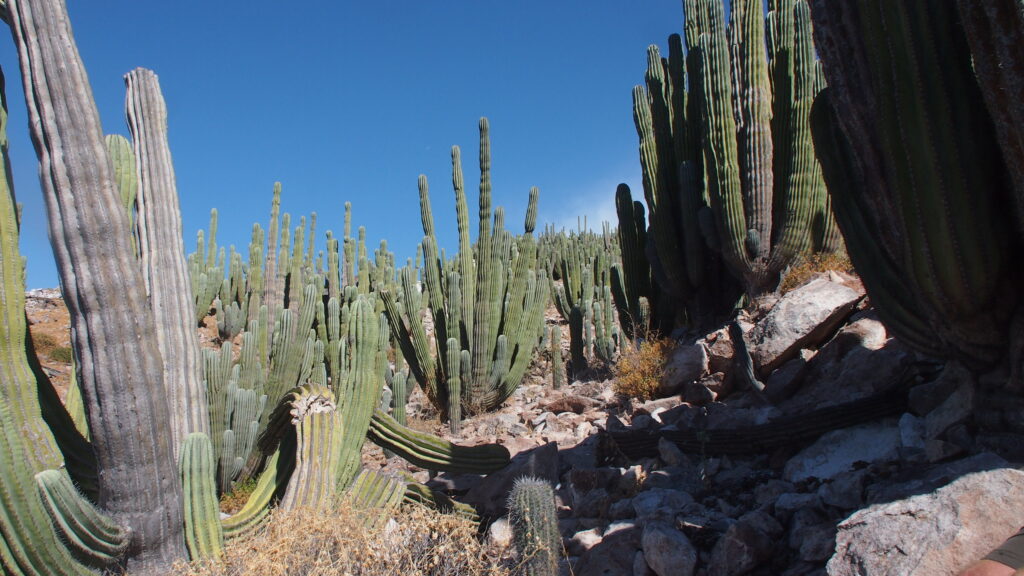
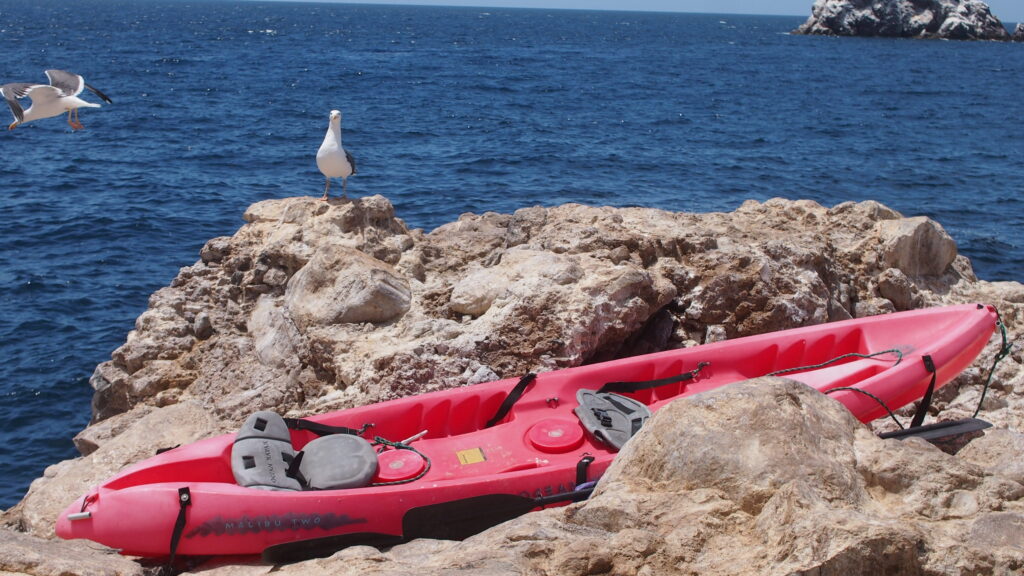
San Pedro Martir has a fantastic Cardon Cactus forest and is often mentioned as the healthiest cactus forest in all of Sonora. There is a steep trail that starts from the biologist’s campground that will take you to the forest. But to get to that trail, you must land on the narrow rock outcropping marked above on the map. You must be careful not to disturb mating and nesting seabirds if you should hike on the island, and a permit is required by Conamp to land. The landing can only be done by kayak and is not easy and almost impossible in a southerly swell. I have worked with many different biologists on the island over the years, and we were always dropped off by panga on the narrow outcropping. I recently landed my kayak there, but it was sketchy in the south swell. There is an excellent landing for a dinghy or kayak on the north side of the island. The largest center bite has a rocky beach located at the bottom of a canyon where fishermen have installed a monument to the Virgin of Guadalupe. This would also appear to be an excellent canyon to hike up for a viewing of the cactus forest, although I have not hiked it. You will see there are many walls from the guano mines of the 19th century going up that canyon and all over the north side of the island.
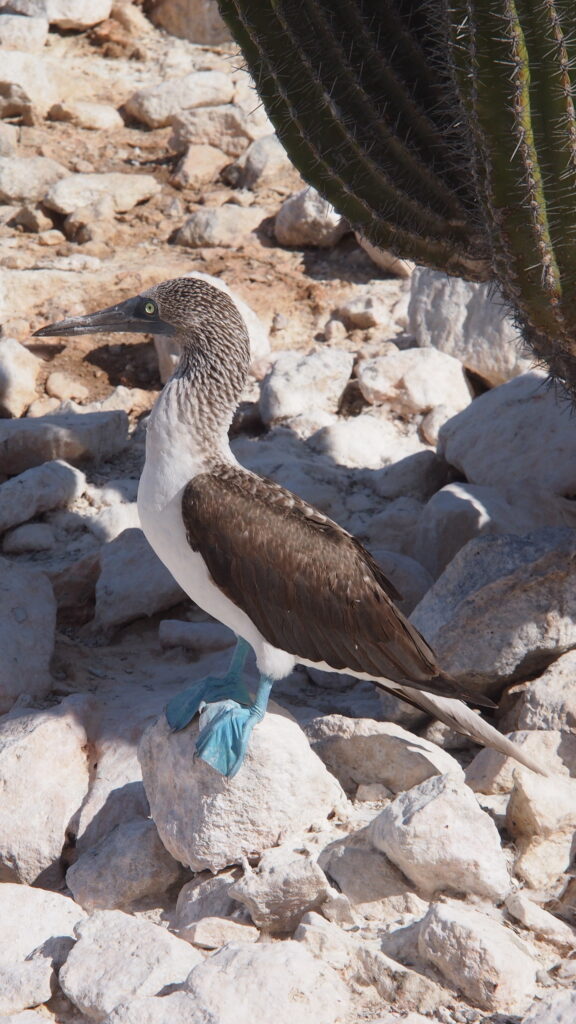
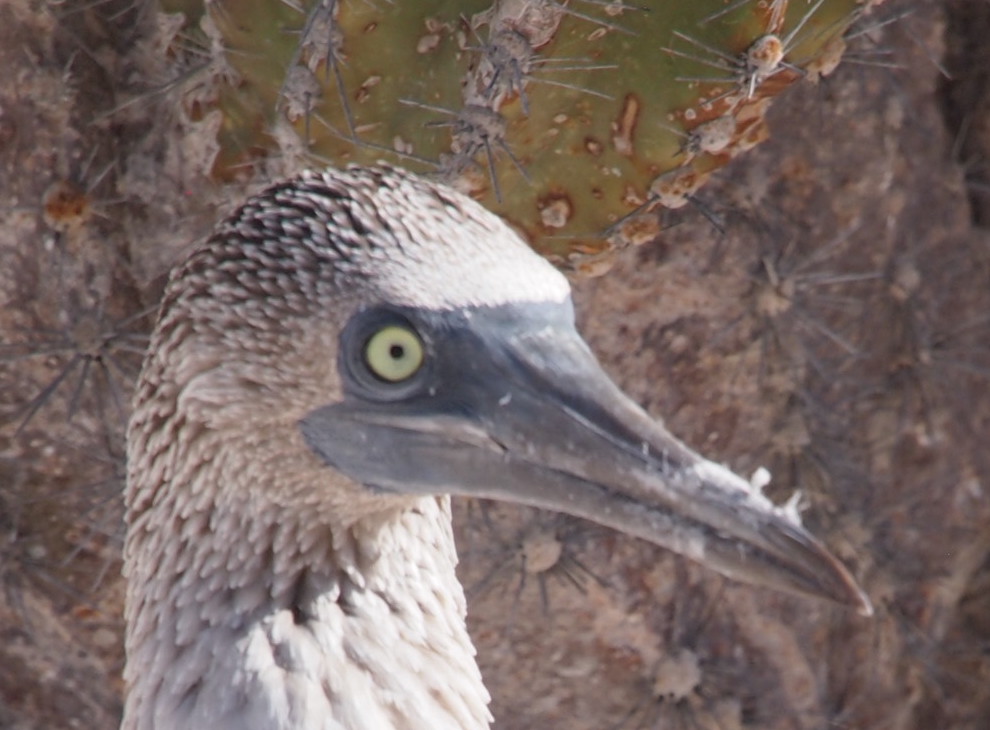
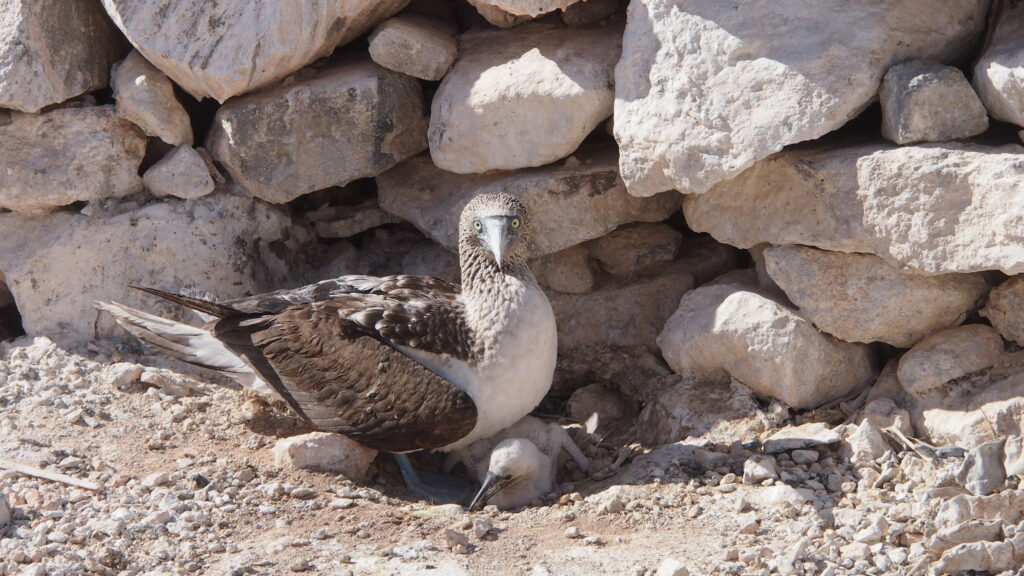
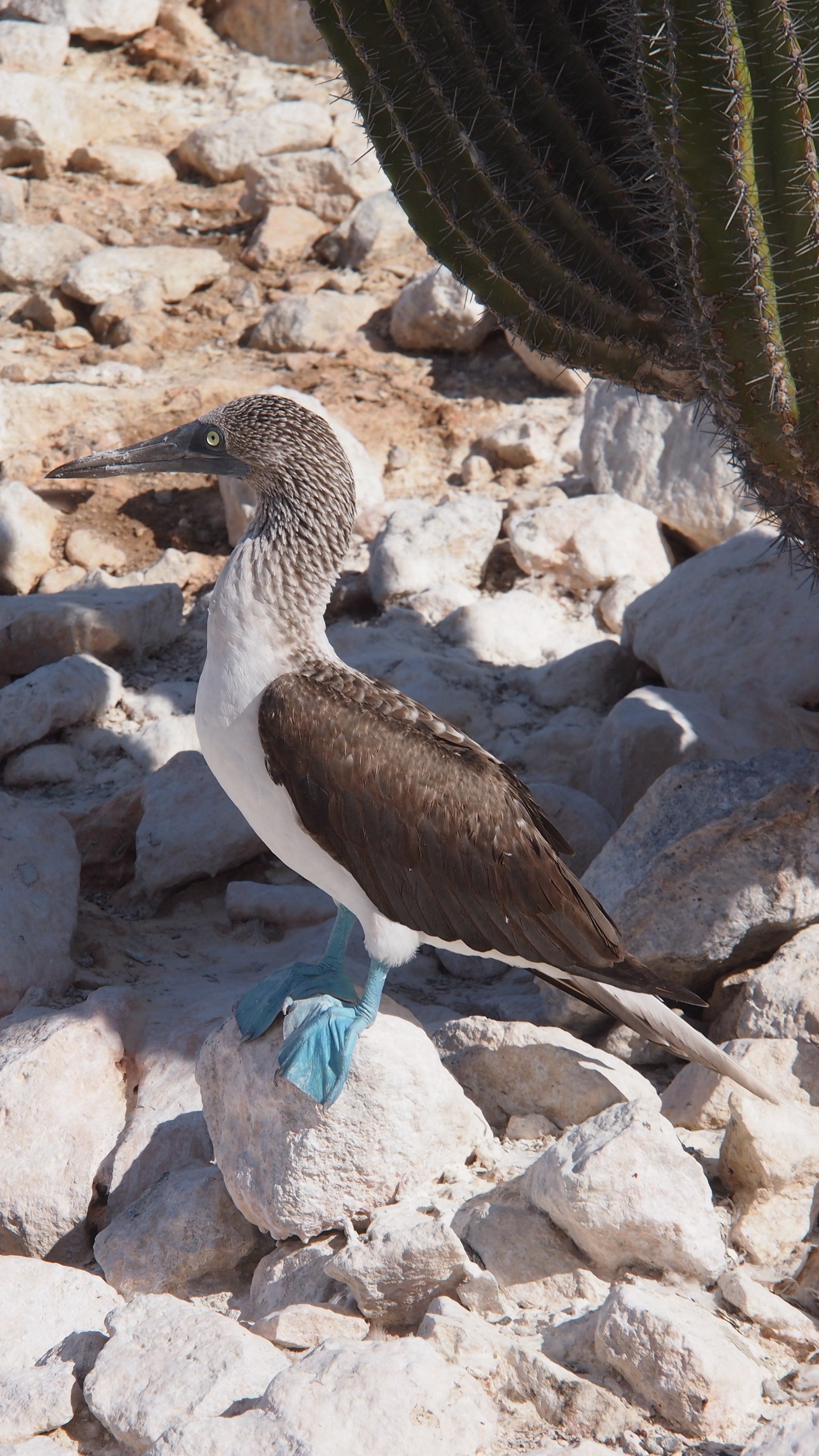 This island boasts the world’s largest nesting colonies of blue-footed and brown-footed boobies, along with one of the largest colonies in Mexico of brown pelicans. The red billed tropic bird also inhabits the island, and I regularly see them flying above the boat when at the northeast anchorage. Martir marks the fourth most important breeding colony of sea lions in the Gulf of California. In the surrounding waters there are 14 species of marine mammals. Before climate change, it was a relatively easy task to find sperm whales feeding west of the island. Unfortunately, the Humboldt squid, which were ubiquitous a few decades ago, have all but vanished from the area along with the sperm whales that fed on them.
The endemic species of whip tailed lizards (Aspidoscelis martyris) that live on the island are one of my favorite species. They are the most curious of reptiles and will crawl all over anything you set down on the ground. Another of my favorite species found on the island is the famous fishing bat (Myotis vivesi). I have never observed this species at Martir, but I have seen the fishing bat twice in all my 36 years of cruising the gulf. Once I was anchored on the east side of Isla Tortuga on a full moon and perfectly calm sea. As I gazed at the island, I noticed what I thought was a seabird fishing in the moonlight. I eventually realized that it was not a bird at all and was the famous fishing bat of the Sea of Cortes.
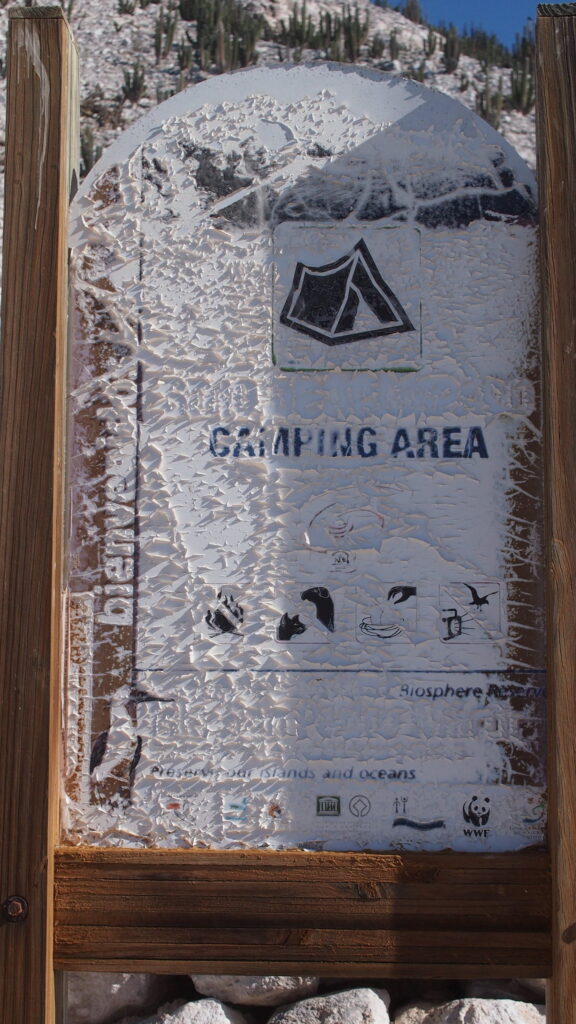
Visiting many ANP’s or Area Natural Protegido often requires a permit from the government. Depending on how many ANP’s you might visit in any given year, some travelers opt to purchase from the government a Passaporte de Conservacion or Conservation Passport. For one fee this will give you access to all ANP’s throughout the whole country for one calendar year. https://descubreanp.conanp.gob.mx/es/conanp/pasaporte-brazalete-conservacion
Here is a list of ANP through out all of Mexico….https://descubreanp.conanp.gob.mx/es/conanp/Todas_las_ANP
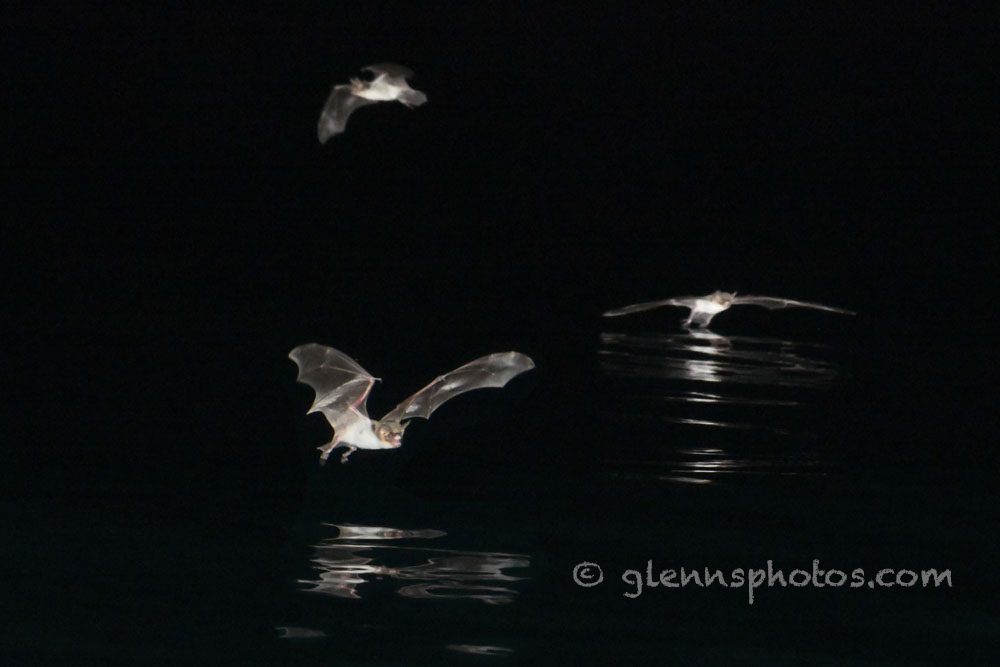
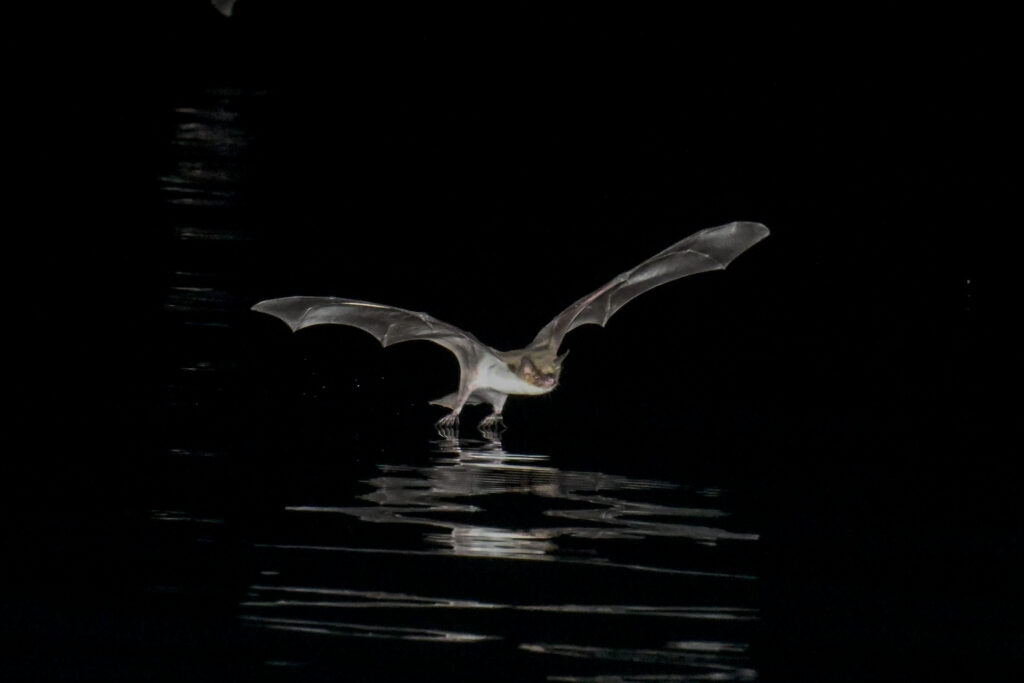
Special thanks to Glenn Thompson for these images of Myotis Vivesi.
I asked Glenn how he got these amazing images and here is how he explained it. Regarding Myotis, I have been cruising the Gulf for as long as I have had a boat in Mexico and I have only seen them 2 or 3 times. I have only photographed them 2 times. The first time was at Isla Tortuga with a video camera using an old battery powered flashlight for illumination. The resulting video is so bad I’ve never showed it to anybody. In the video you could see something flying around at very high speed skimming the water, that was all. It was a gathering of 8 or 10 bats.
The second time was a few years later, in 2017at Isla San Marcos. That was probably a gathering of about 50 bats. I hung a light off the end of one outrigger pointed down at the water to attract bait. My anchorage was filled with larval fish about an inch long that night. The bats were skimming the water all through the anchorage mostly well away from the boat.
My photography procedure was to set my camera on a bucket turned upside down on the swim step of the boat focused on a single spot below the light dangling from the outrigger. My illumination for the photo was a Nikon strobe light attached to the camera. The duration of the strobe flash was effectively my shutter speed. When I saw a bat swooping down some where near my focus spot on the water I fired. At their speed of travel, it was not possible to follow one in flight. After about 1000 shots, I had about 35 images with the whole bat in the picture.